A geometry of togetherness
Art Museum Z33
Hasselt, Belgium
2025
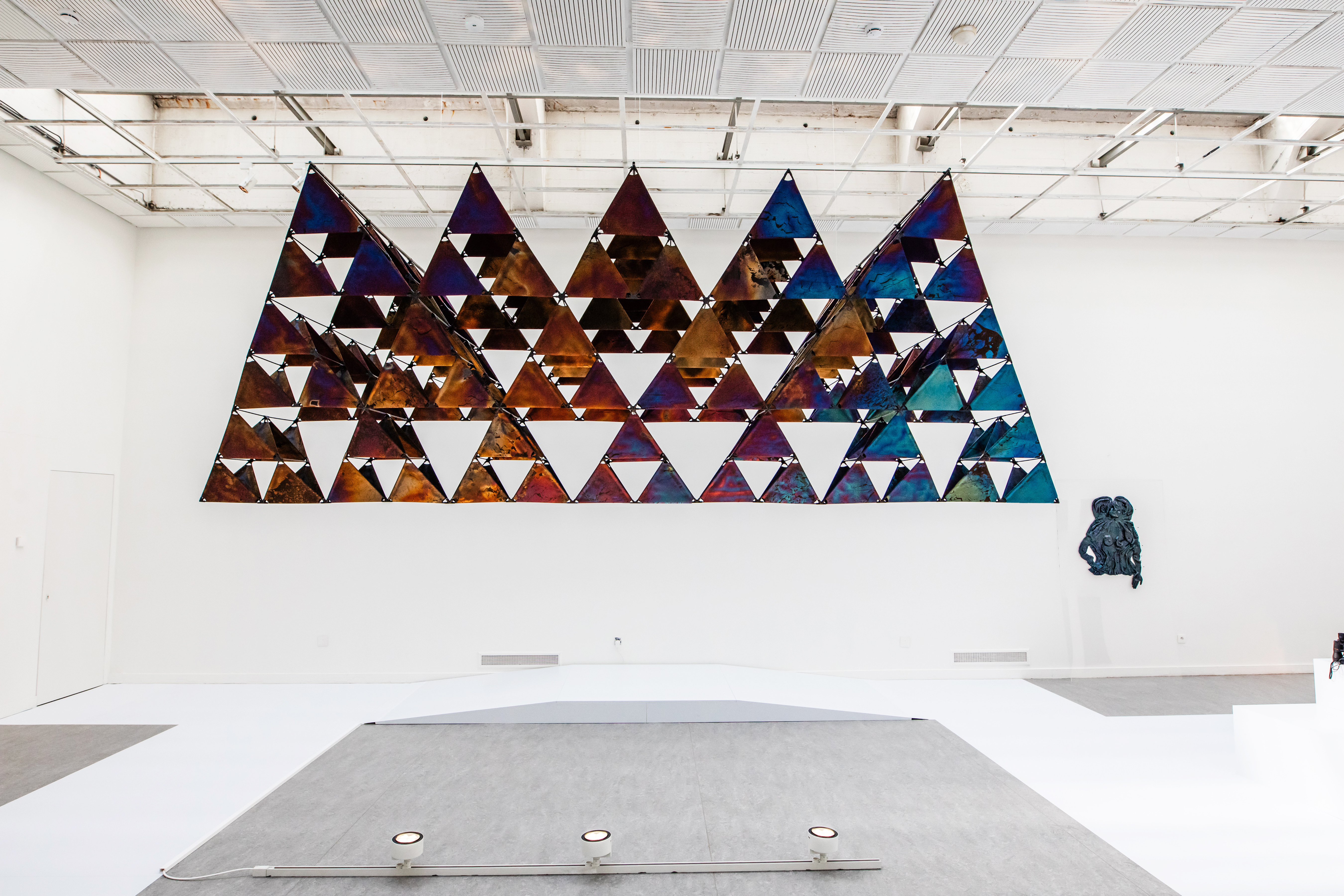
A geometry of togetherness,
2025
Fiberglass tubes, 3D printed
joints, polyester fabric, lab-developed structural colors.
450x190x128cm
Z33, Hasselt, Belgium
Expo:
Colour. Seeing beyond pigment
Curated by Annelies Thoelen
Scenography: Woman Cave Collective
Photography: ©Kobe Vanderzande
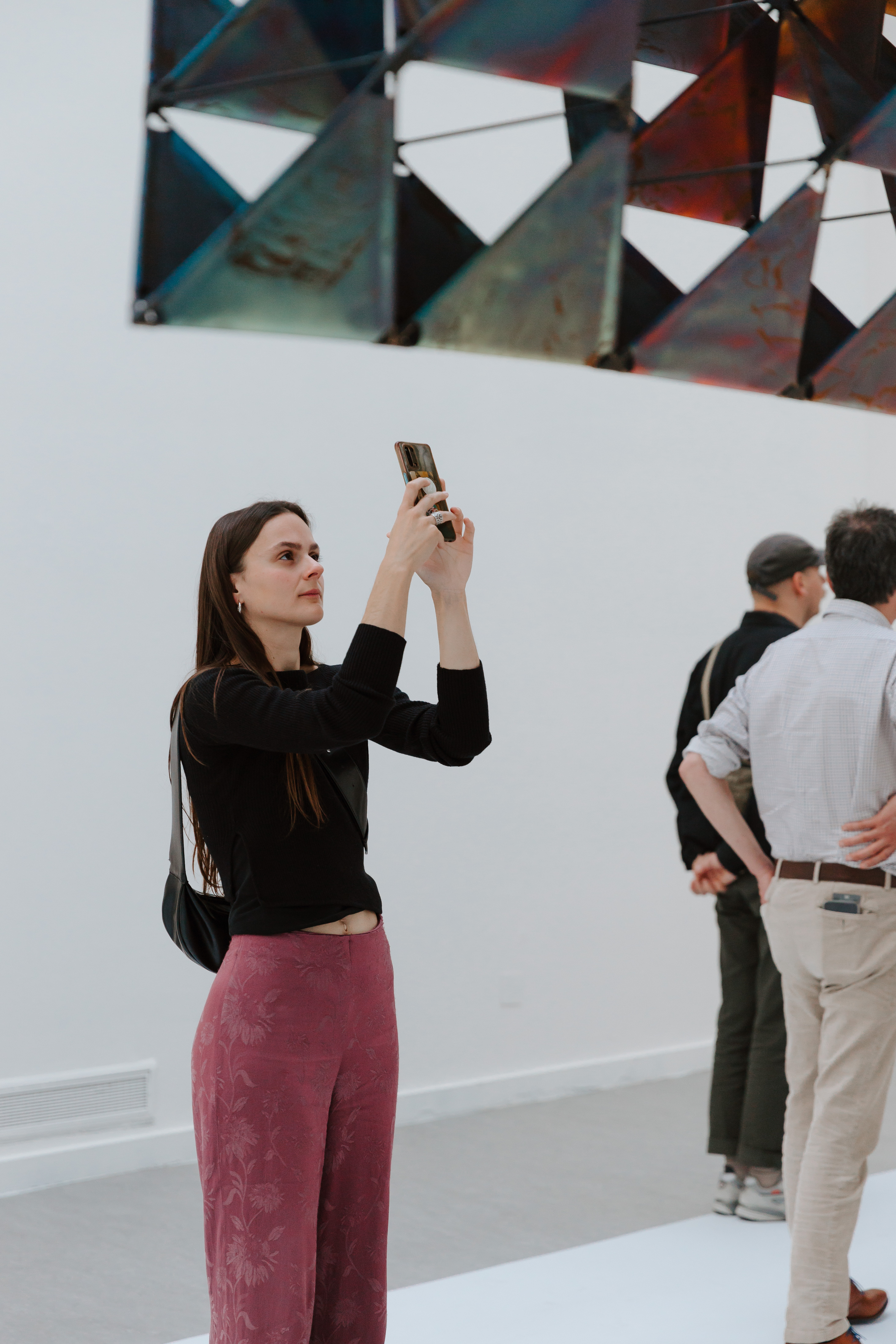
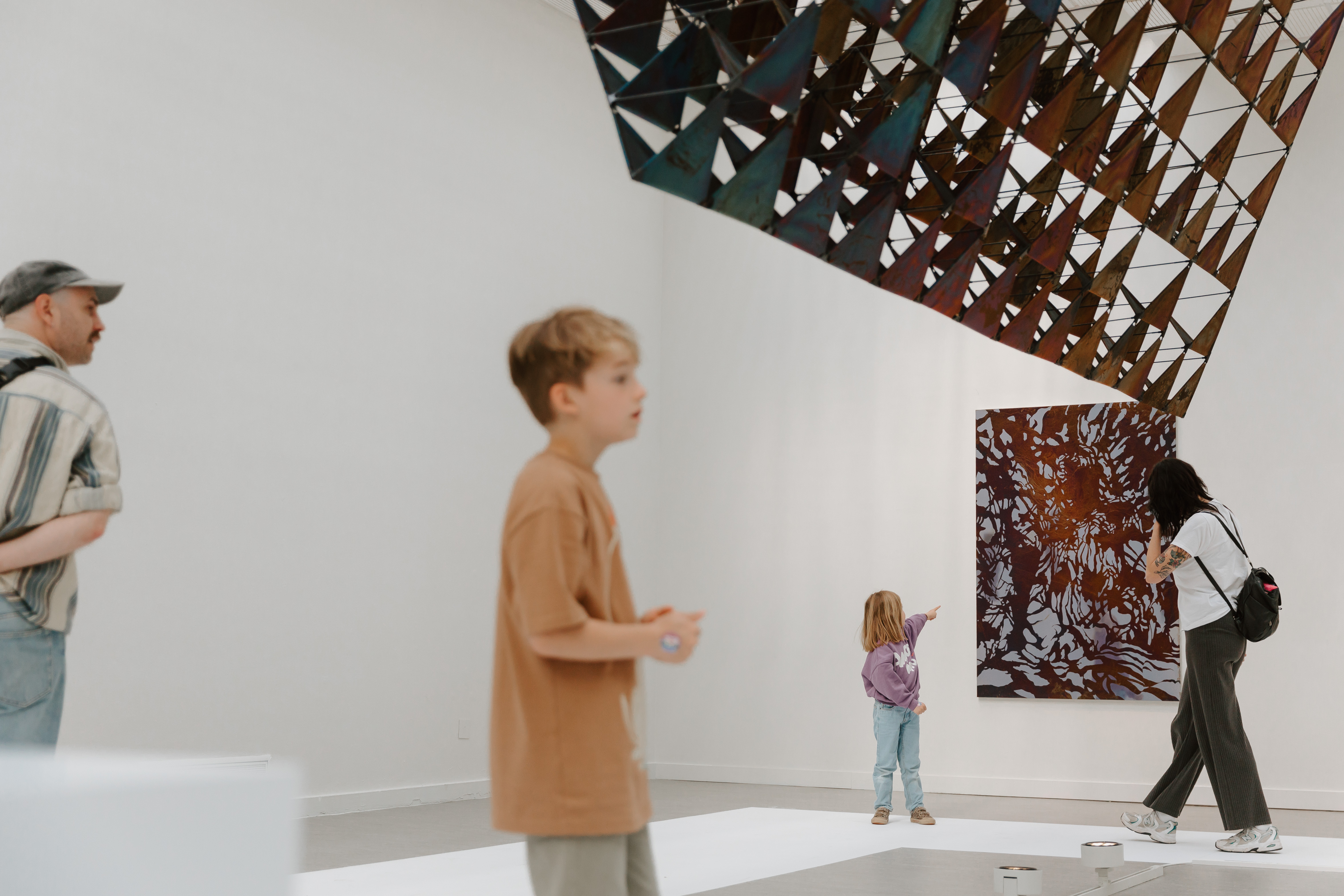
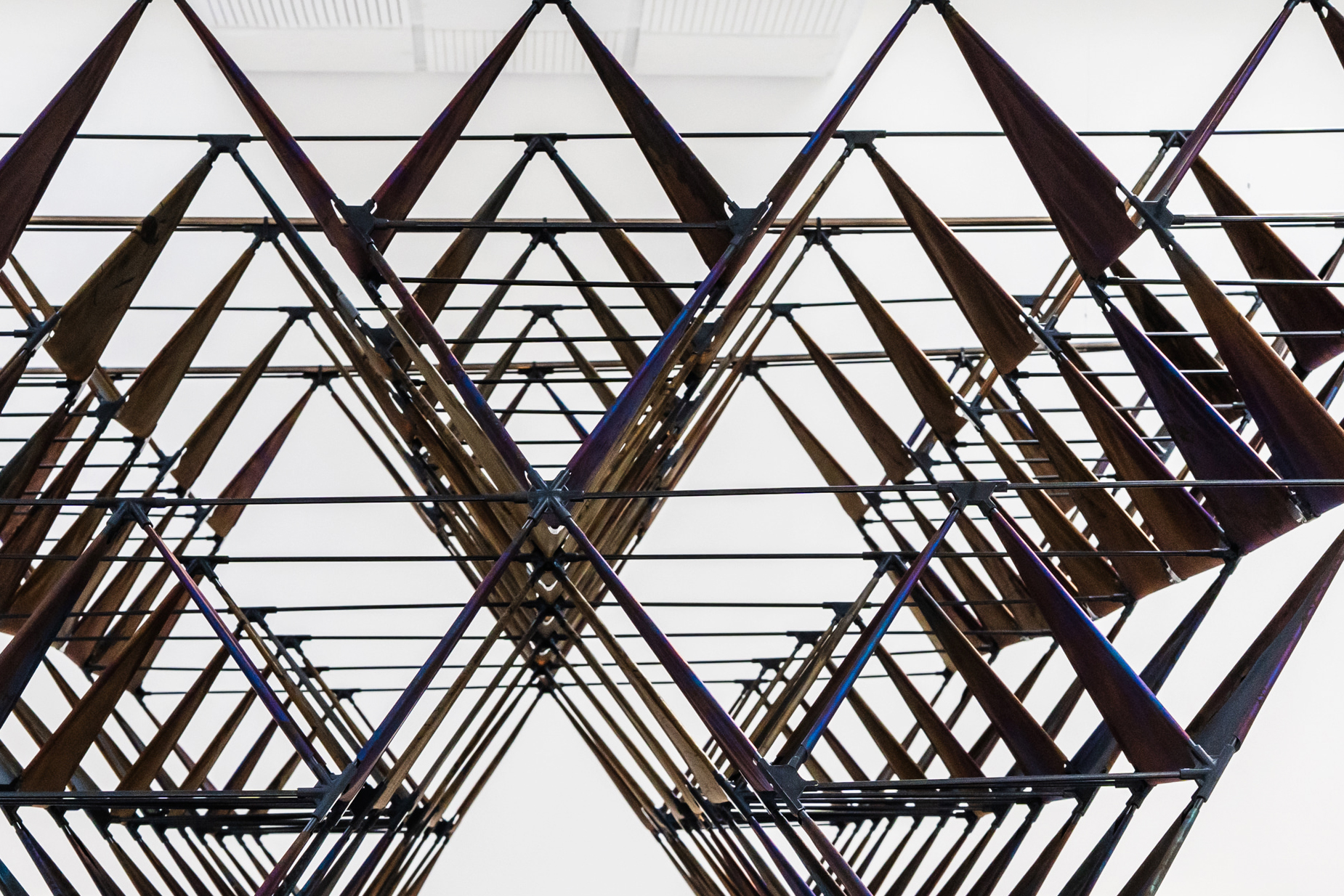
A Geometry of Togetherness is a large-scale kite composed of lightweight fabric and a framework of interlocking tetrahedral cells. Its structure draws inspiration from Graham Bell’s early 20th-century experimental flying machines and the collective movements of starling swarms.
The kite’s surface is coated with lab-developed structural colors that echo those found in nature, such as in butterfly wings and beetle shells. Unlike pigments, structural coloration arises from nanoscale surface patterns that reflect and refract light, producing vivid hues that shift with the angle of view and changing illumination. The kite draws its overall color palette from the structural colors found in the feathers of starlings.
The project explores how individual elements acquire new qualities through connection. Nanoparticles, aligned in specific arrangements, produce iridescent effects. Starlings, by following local rules and moving collectively, form flocks that offer mutual benefit. Similarly, the interlocking arrangement of tetrahedral cells gives the kite its structural strength and resilience. Whether mathematical forms, microscopic structures, or living systems, togetherness gives rise to something greater than the sum of its parts.
The structural colors were developed at LABORATORIUM, the experimental biolab for art and design at KASK, Ghent, Belgium, in collaboration with scientist Maria Boto and designer Heleen Sintobin.
The artwork was
commissioned
by Z33Museum.

Photography: ©Kobe Vanderzande

Photography: ©Kobe Vanderzande


Photography: ©Selma Gurbuz
Photography: ©Kobe Vanderzande


Photography: ©Kobe Vanderzande
